Microchipping and registering a dog in Czechia and Slovakia: the rules and what to check
PetPal Redakce · October 20, 2026
"The dog is chipped, so that's sorted, right?" Vets hear this question often. But the chip is only half of it. For someone to bring a lost dog home, the chip number has to lead to you, and this is exactly where a lot has changed in recent years.
Below you will find answers to the most common questions, separately for Czechia and for Slovakia, and a short list of what to check at your next vet visit.
What is a chip, and does it hurt?
A microchip is a tiny device about the size of a grain of rice. The vet inserts it under the skin with a needle, usually on the left side of the neck. The chip has no battery, transmits nothing and does not show where the dog is. It carries only a unique fifteen-digit number that a scanner can read. The procedure itself is quick, and for the dog it is much like a routine vaccination.
Does a dog in Czechia have to be chipped?
Yes. Since 1 January 2020 every dog in Czechia must be marked with a microchip. A puppy must be chipped at the latest at its first rabies vaccination. That is because a rabies vaccination is only valid for a dog that has a chip. Without a chip, the law treats the dog as unvaccinated.
What is the Central Dog Register?
Since 1 July 2026 Czechia has had the Central Dog Register (Centrální evidence psů, CEP). It is the only official register of dogs, it was set up by the veterinary act, and it is run by the Chamber of Veterinary Surgeons of the Czech Republic (KVL ČR). Vets, the Czech State Veterinary Administration (SVS), the police and municipalities have access to the data, so a found dog can be matched with its owner quickly.
What this means for you:
- Who registers the dog: a vet, at your request. Registration does not happen on its own.
- When: a puppy at chipping, before it goes to its new owner. An adult dog at the latest at its next rabies vaccination, so you do not need an extra trip to the vet.
- What it costs: each practice sets its own registration fee.
- Private registers are not enough. If your dog is listed in one of the private registers, that does not meet the obligation, and you still have to register it in the CEP.
The SVS publishes the details (svs.gov.cz).
And what about Slovakia?
In Slovakia, chipping dogs has been mandatory since 1 September 2018, with a transition period for older dogs until 31 October 2019. A dog must be chipped by the age of 12 weeks at the latest, and always before its first change of owner. Only a private vet registered with the Slovak Chamber of Veterinary Surgeons (KVL SR) may chip.
At the same time the vet enters the details of the dog and of you into the Central Register of Companion Animals (Centrálny register spoločenských zvierat, CRSZ), which is managed by the Slovak State Veterinary and Food Administration (ŠVPS). A summary of the obligations is available directly from ŠVPS (svps.sk).
And cats?
For cats that live at home a chip is not mandatory, in Czechia or in Slovakia. But as soon as you travel with your cat to another EU country, it needs, just like a dog, a chip, a valid rabies vaccination and an EU pet passport. For cats that go outdoors a chip is worth it even without travel: if they wander off, it is the most reliable way back.
We have a chip. What should we check?
A chip that leads to an old phone number will not help the person who finds your dog. Go through these five points:
Five things to check
- you have the chip number written down somewhere other than the vaccination record, for example in your phone
- the dog is listed in the official register: the Central Dog Register in Czechia, the CRSZ in Slovakia
- the contact details in the register are correct: after a move or a new phone number, have them updated; your vet will tell you how
- at a check-up, the vet scans the chip and confirms it works
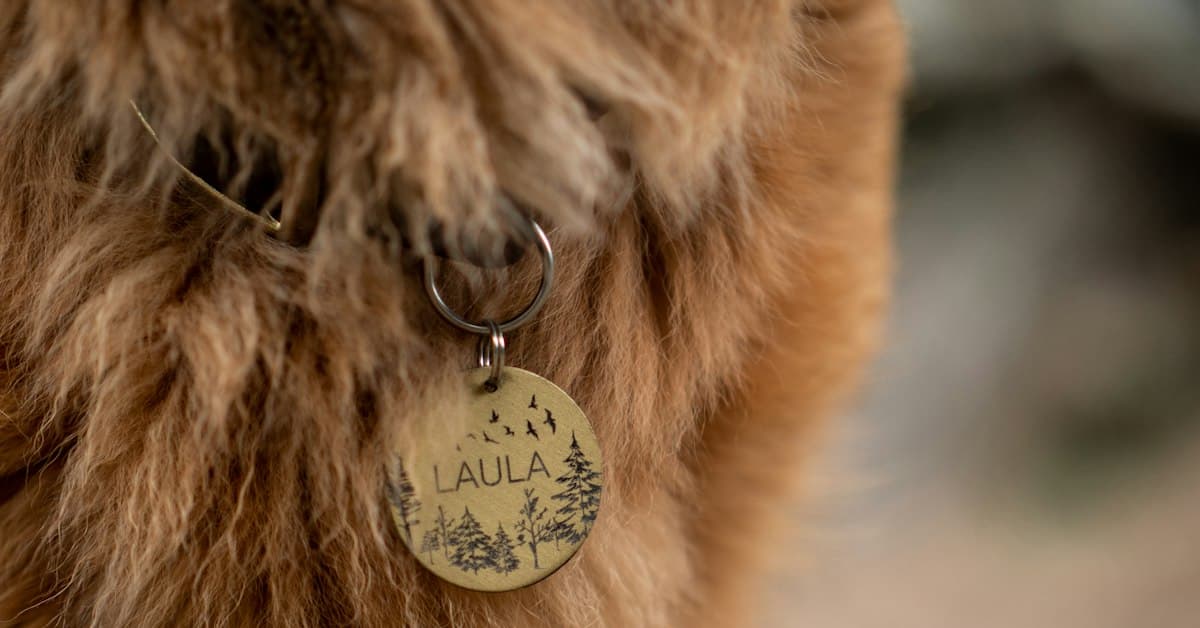
- the dog also wears a tag with your contact details on its collar, because the finder may not have a scanner to hand
This information reflects the situation as of October 2026. Rules change, and your vet or the veterinary administration can always confirm what currently applies.
Summary
In both Czechia and Slovakia a dog must have a chip and must be listed in the official register. In Czechia, the easiest moment to sort out the Central Dog Register entry is the next rabies vaccination. What matters most, though, is the thing that is easy to neglect: up-to-date contact details the finder can reach you on.
You can save the chip number in your pet's passport in PetPal, next to vaccinations and other health records. Switch on your pet's emergency card and the QR code on its tag will show the finder your phone number, even without a scanner. Only you can switch the card on, and you can switch it off again at any time.