A home first-aid kit for your pet: what it must contain
PetPal Redakce · September 22, 2026
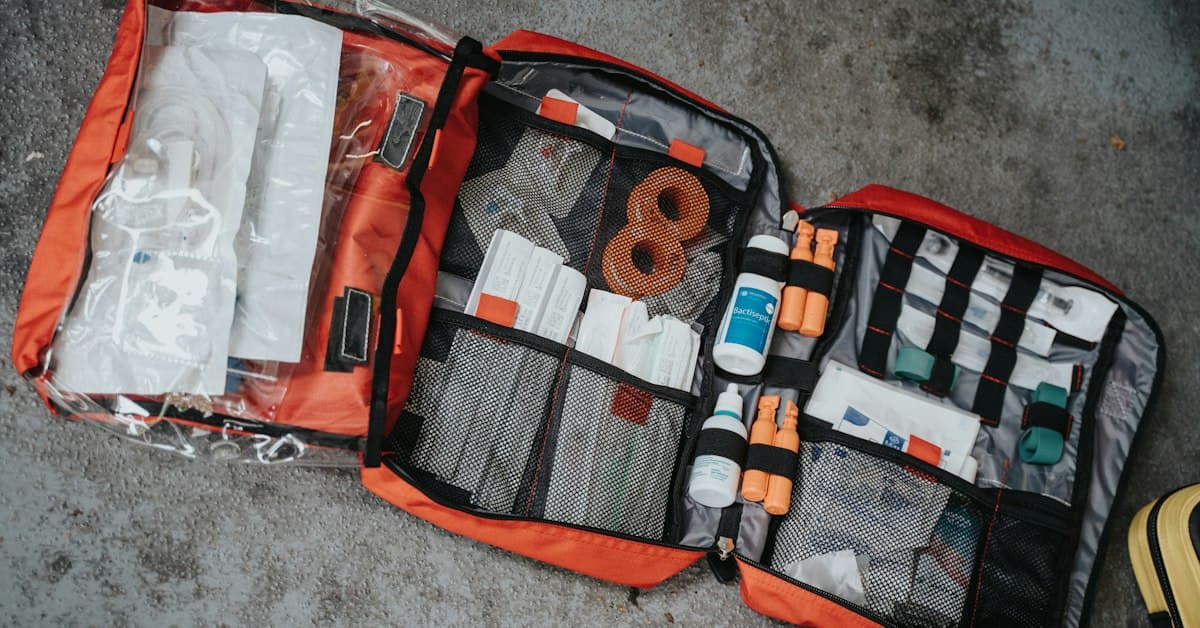
A cut paw on a walk, a tick buried deep in the skin, a small tear from the cat you share the sofa with. Most household accidents are not life-threatening, but they all have one thing in common: you handle them far more calmly when a ready first-aid kit is within reach.
A pet first-aid kit does not replace the vet. It has one job: to buy time and keep things from getting worse until you reach your own vet or an emergency clinic. Below you will find what belongs in it, how to store it, and what to keep out.
Why have one at all
When there is blood, or your pet suddenly behaves differently, it comes down to minutes and, above all, to staying calm. A ready kit saves you from tearing through drawers while your hands are shaking. It does not need to be large. It just needs the essentials, everyone at home should know where it lives, and nothing in it should be expired.
What belongs in the kit
Build it from a few groups. You probably have most of it at home already, the rest you can pick up at a pharmacy or from your vet.
The basics of a home first-aid kit for a dog or cat
Dressings and bandages:
- sterile gauze and a non-stick wound pad
- self-adhesive elastic bandage (vet wrap), medical tape
- blunt scissors and tweezers
- a tick remover
Cleaning and disinfection:
- saline solution for flushing a wound or eye
- a veterinary antiseptic (for example a chlorhexidine solution)
- disposable gloves
Tools and aids:
- a digital thermometer (taken rectally)
- a needle-free syringe for giving water or flushing
- a blanket or towel, a muzzle (even a rolled bandage, pain raises the risk of biting)
Important contacts:
- your vet's number and the nearest 24-hour emergency clinic
- your pet's microchip number and emergency card
What to keep out
Be careful here, because well-meant help sometimes does more harm than the injury itself:
- Human painkillers. Paracetamol and ibuprofen are toxic to dogs and especially to cats, even a small dose can be fatal. Never give them without a vet's instruction.
- Hydrogen peroxide to induce vomiting. Only on a vet's explicit instruction, used blindly it can cause damage.
- Cotton wool directly on a wound. The fibres stick and complicate healing, use gauze or a non-stick pad.
- Disinfectant in the eyes. Flush an eye with saline only, antiseptics and alcohol-based products do not belong there.
PetPal provides general information, not a veterinary diagnosis. For any serious injury or change in condition, contact your own vet.
How to store and maintain it
A kit is useless if you cannot find it in a crisis or half the contents have expired. A few habits that solve this:
- Keep it in one known place and tell everyone at home about it.
- Twice a year, check expiry dates and restock what ran out. Tie it to the clocks changing so you do not forget.
- Prepare a smaller version for the car and trips, most accidents happen away from home.
When the kit is not enough and you go straight to the vet
A kit handles the small things. Call the vet or an emergency clinic without waiting if bleeding will not stop, the animal is struggling to breathe, collapses, vomits repeatedly, or you suspect poisoning or severe pain. Both the Czech Republic and Slovakia have 24-hour veterinary clinics in larger cities, save the number before you need it. For general care guidance you can also turn to the veterinary chambers, the Czech one (vetkom.cz) and the Slovak one (kvlsr.sk).
In short
A good kit is a small investment that pays off in a single stressful moment. Put it together, store it somewhere known, watch the expiry dates, and know what to keep out. The rest is about calm: the less you have to search for in a crisis, the sooner you help your pet.
Keep your vet's number, the microchip number, allergies, and the emergency card in PetPal so they are always at hand, even when the kit itself stays at home. Fill in your pet's profile in the app and the digital part of the kit is done.